Bueckers Can Make the Defender Move First
Paige Bueckers often creates an advantage through a small change rather than a dramatic burst. She waits half a beat, uses a screen at a different angle, or keeps the ball long enough for a defender to commit before making the next choice. That control of pace helps explain the scoring and playmaking behind her basketball journey. In Soccer Streets’ cross-sport coverage, her game provides an example of using timing to create an advantage, while the account remains a basketball profile rather than technical soccer instruction. Her career also contains distinct chapters: immediate recognition at UConn, serious injury interruptions, a national championship, and a rapid transition into professional responsibility with Dallas. This profile connects those events to the way she plays instead of treating them as an inevitable sequence of awards. It follows the record through verified 2026 regular-season results, with attention to efficiency, decision-making, and the responsibilities of a guard who can both create a possession and complete someone else’s work.
A: She played at the University of Connecticut.
A: An ACL injury kept her out for that season.
A: Yes. The Huskies won the 2025 title in her final college season.
A: The Dallas Wings made that selection.
A: She can change timing to reveal or create a defender's commitment before choosing the next action.
A: No. The value comes from choosing when to pause and when to accelerate.
A: It allows her to work productively alongside other creators.
A: They describe her completed Dallas regular season, not a blend of competitions.
A: No. The history is relevant without establishing a certain future outcome.
A: Study the tempo and positioning just before the defender commits.
An Immediate College Impact Met a Longer Development Process
Bueckers arrived at UConn in 2020 with a substantial high-school reputation and quickly demonstrated that she could contribute in an elite college setting. In 2021 she won the Wooden Award, Naismith Trophy, AP National Player of the Year and USBWA National Player of the Year, as UConn’s award announcement records. That immediate success is an important career landmark, but it should not be mistaken for proof that the remaining years would follow a simple upward line. College development still involved learning opponents, refining responsibilities, and working inside a team whose standards existed before she joined. Early excellence created opportunity and expectation rather than eliminating the work that remained.
The quality of a college guard is not captured only by how often she controls the ball. At a program with other talented players, contribution can include moving into the right space, recognizing who has the better matchup, and keeping an advantage alive after the first pass. These tasks help explain why Bueckers’ profile includes more than scoring totals. She can organize a possession, but she can also operate within one that another teammate begins. That flexibility matters when opponents prepare to remove a favorite action or when a lineup asks for a different distribution of responsibility.
Her college career consequently offers a useful way to distinguish production from role. A player may score efficiently because she chooses well, because teammates create good opportunities, or because she executes difficult attempts at a high level. Usually several factors interact. The strongest profile asks how those factors combine rather than choosing one explanation that flatters or diminishes the athlete. For Bueckers, reading the game and fitting decisions to the available advantage are central themes, while the particular assignments changed with the team around her.
Injury Interrupted the Calendar Without Ending the Story
Bueckers missed the 2022-23 season after an ACL injury. That followed a separate 2021-22 interruption involving a tibial plateau fracture and meniscus injury, documented by UConn; the two absences were different episodes. The league’s official biography records the missed season. Recovery should not be reconstructed from a public reputation for determination or presented as a timetable for other athletes. The relevant sporting fact is that she returned to competition and later resumed substantial responsibilities. A calendar can identify the interruption, but it cannot reveal every medical assessment, private difficulty, or adjustment that formed part of returning to a demanding team environment.
The Championship Completed One Chapter at UConn
UConn won the 2025 national championship in Bueckers’ final college season. The university’s career record documents that achievement. It supplied an important team landmark after the interrupted years, but the title should remain a collective result. A championship requires complementary performances, preparation, depth, and execution across a tournament. Recognizing her central role does not require reducing the other players to supporting scenery. Her individual journey and the team’s achievement connected without becoming the same thing, which is essential to telling the career accurately.
The end of college also changed the nature of the next challenge. A successful player can leave with an established identity and still need to learn how that identity works against professionals. The championship did not answer every question about the WNBA transition; it provided a strong foundation from which to begin it. That distinction makes the next stage more interesting. The professional evidence would have to come from new opponents, new teammates, and a schedule that asks a player to solve familiar basketball problems with less space and more experienced resistance.
Dallas Gave the First Pick Immediate Responsibility
The Dallas Wings selected Bueckers first overall in the 2025 WNBA Draft. A first pick brings a clear expectation of impact, but the practical job still depends on the roster and system. A guard must learn where teammates want the ball, which screening angles create an advantage, and how opponents plan to pressure her. Those details take repetitions. College recognition can earn attention and opportunity; it cannot supply instant timing with people who have not yet learned one another’s habits. The transition therefore concerns relationships as much as individual skill.
Bueckers’ rookie season produced 19.2 points and 5.4 assists per game, along with WNBA Rookie of the Year honors. These are concrete professional outcomes, not assumptions based on draft position. They establish that she could carry meaningful offensive responsibility against WNBA competition. They do not suggest that every performance was identical or that the learning process was complete. The value of the season lies partly in the amount of real evidence it supplied: possessions against different coverages, late-game decisions, and the ordinary need to prepare again after a difficult result.
For viewers, the useful comparison is between how an action was created and how it ended. A successful shot may begin with a defender leaning too far over a screen. An assist may begin with waiting rather than accelerating immediately. The final box-score event records the result, while the preceding decisions explain its availability. Watching those relationships makes Bueckers’ transition easier to understand. It also avoids turning a promising rookie campaign into a prediction that future improvement must arrive at the same speed or in the same statistical category.
Changing Pace Is an Active Skill
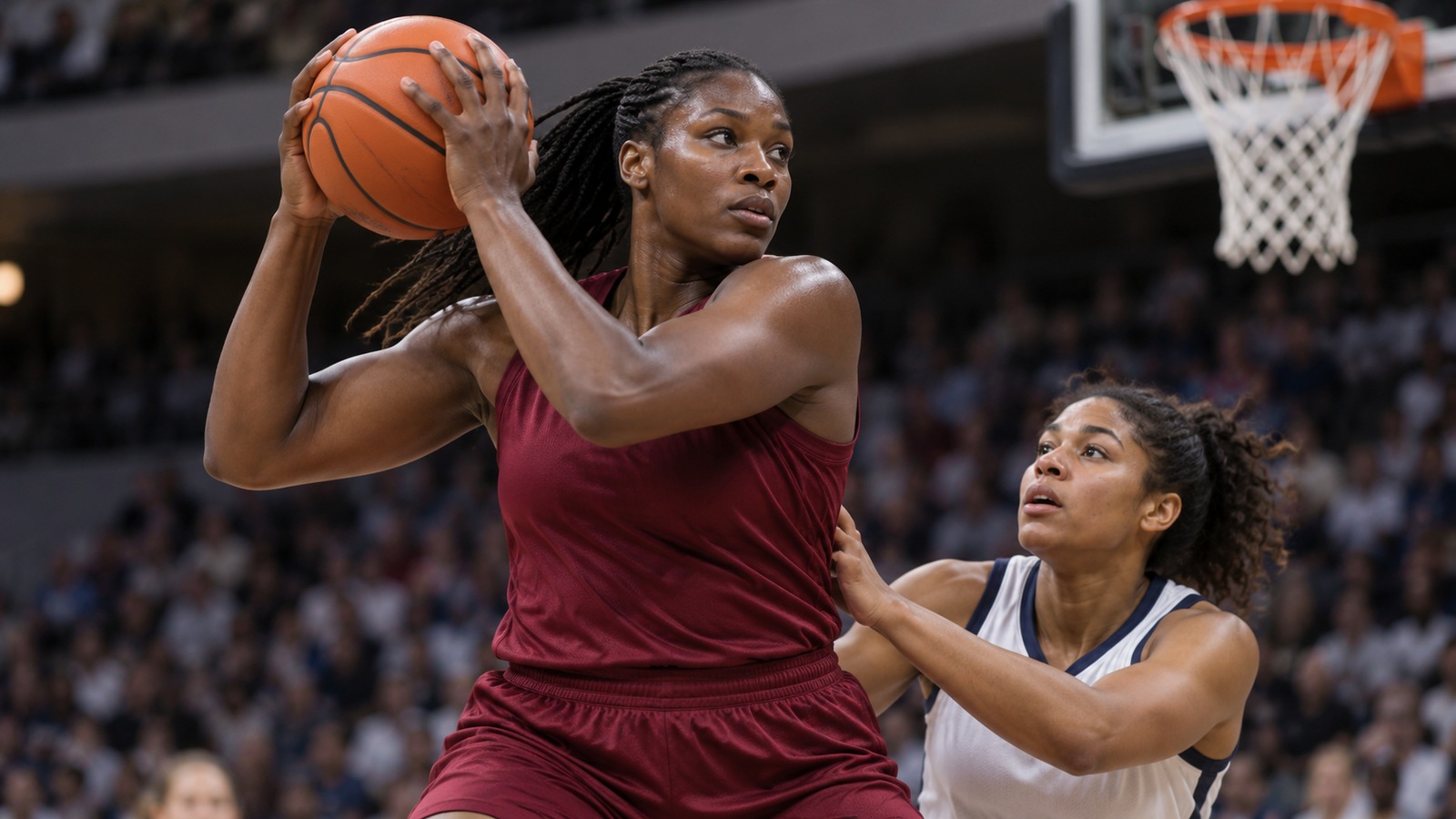
Playing under control does not mean playing slowly all the time. Bueckers’ tempo changes are useful because they alter the defender’s timing. A hesitation can make an opponent rise from a balanced stance; a quicker step can then use the opening. Around a screen, a pause may reveal whether help is staying with the ball or returning to the screener. These decisions create information as well as space. The player is not simply waiting for the defense to make a mistake; she is using the sequence to make the defender choose and then responding to that commitment.
The Midrange and the Pass Keep Each Other Available
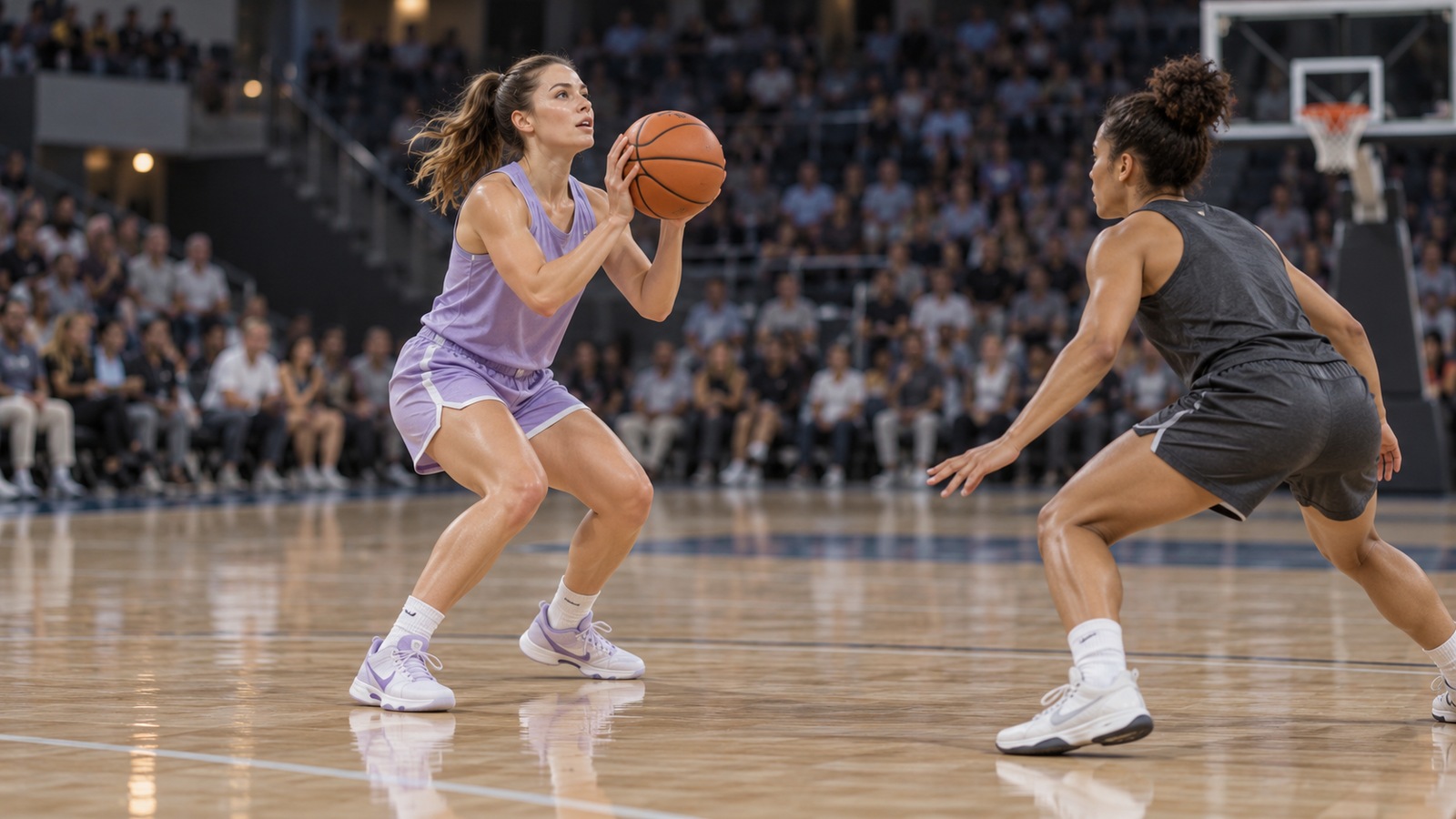
A guard who can stop and score between the rim and the three-point line presents a different problem from one whose drive always continues toward the basket. The defender cannot assume that retreating will remove the shot. For Bueckers, the ability to arrive balanced at an intermediate spot helps preserve several options. She may finish the possession herself or use the attention to find a teammate. The point is not that the midrange is automatically the best shot. It is that having a credible option there can affect how the entire possession is defended.
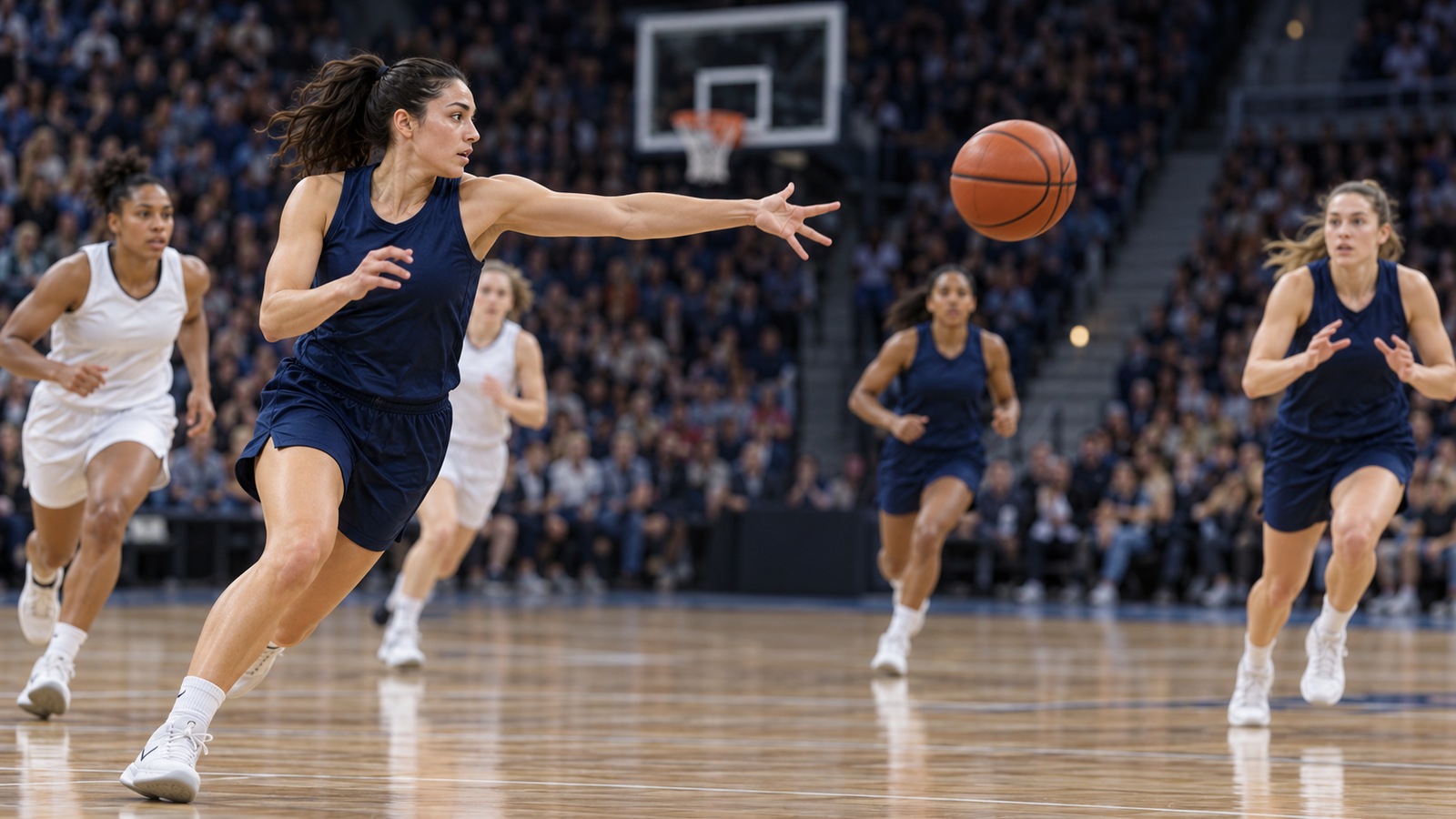
Passing becomes more effective when the defense has a reason to remain concerned about the passer’s own scoring. If a defender can ignore the ball handler as a threat, the available lanes change. Bueckers’ scoring and playmaking therefore belong to one discussion. The same approach also explains why a completed pass is not always a complete evaluation of the decision. Timing, the receiver’s position, and the next defensive response determine whether the ball creates an advantage or merely moves the responsibility elsewhere. Effective creation requires more than collecting the recorded assist.
Playing Without the Ball Adds Lineup Flexibility
Bueckers can also contribute when another guard initiates. Moving into a useful receiving position, recognizing a cut, and preparing to shoot or pass quickly can keep the offense from depending on one person’s dribble. That adaptability is particularly important when teams have several creators or an opponent tries to take the primary action away. It should not be confused with standing aside. Good off-ball play remains an active reading task, and its value may appear in the next teammate’s opportunity rather than in an individual statistic credited directly to the player who created the space.
The 2026 Season Added Evidence of Efficient Creation
In the completed 2026 regular season, Bueckers averaged 20.9 points, 5.9 assists, and 4.1 rebounds across 42 starts. Dallas’ October 2026 All-WNBA announcement supplies those season figures. They describe a broader professional sample than the first impressions of a new draft pick. The contribution included both scoring and connecting teammates, which fits the playing identity visible in her decisions. As with any season line, the numbers should retain their date and regular-season label rather than being blended with college or playoff totals.
Her league biography also records 2026 shooting percentages of 51.2 from the field, 41.0 from three-point range, and 87.1 at the foul line. These figures concern different shot categories and should not be added together or interpreted as one general percentage. Their importance is that efficiency remained part of the production alongside a substantial creation role. A responsible assessment still considers shot mix and team context. The numbers strengthen the case for effective execution, while the possessions explain the kinds of opportunities she chose and the difficulty of the decisions involved.
All-WNBA Second Team recognition in 2026 added an established league honor to that record. It is a meaningful milestone without being a final verdict on a career in progress. Awards identify recognition within a particular season, and future opponents can still force new adjustments. The more useful conclusion is that Bueckers had already translated important parts of her game into sustained professional contribution. Questions about her eventual ceiling belong to projection; the available evidence concerns the work she had completed by this point and the skills she was showing within it.
A Complete Profile Includes Defense and Limits
Offensive poise does not remove the need to evaluate defense. Positioning, screen responses, off-ball attention, and recovery after a teammate’s mistake all affect a guard’s contribution. These actions depend on team coverage and assignments, so a single steal or a single beaten matchup cannot summarize the full defensive performance. A player can improve through earlier recognition and better positioning without producing an obvious highlight. Including those details keeps the profile connected to the complete game rather than treating the most distinctive offensive skill as a substitute for every other responsibility.
The injury history also belongs in context rather than in a permanent label. It is relevant to the path she took and the interruptions she experienced, but it should not become an unsupported prediction about future availability. Likewise, a successful return should not be used to promise another athlete the same outcome. The factual career account can recognize difficulty, return, and later achievement while leaving private clinical information private. That approach gives the player room to be understood through her current basketball as well as the obstacles that became prominent in the public story.
Watch the Moment Before the Defender Commits
The best viewing habit for Bueckers is to study the half-second before the final action. Notice the pace change, the screen angle, the defender’s weight, and the teammate entering the next space. Those details reveal why a shot or pass became available. The career landmarks provide a route from early UConn recognition through interruption, championship success, and Dallas responsibility. Her playing identity connects the stages: a guard who can use timing and scoring skill to make decisions more difficult for the defense, then choose an action that fits what the court actually offers.