The Deep Shot Opens a Much Larger Game
Caitlin Clark can change a possession before she takes a shot. When a defender meets her well beyond the three-point line, the court opens differently for everyone else: a screener can roll into space, a teammate can cut behind help, and a long pass can arrive before the defense settles. That connection between shooting range and playmaking is the best place to begin this basketball profile. For soccer readers, it offers a cross-sport example of how one player’s threat changes the space available to teammates; the basketball achievements stand on their own terms. The records explain the scale of her rise, but the basketball explains why opponents must react. From Iowa’s consecutive national-final appearances to her professional development with Indiana, Clark’s career combines extraordinary offensive production with the adjustments demanded by stronger, more prepared defenses. This overview follows the college foundation, the 2024 rookie breakthroughs, the injury-interrupted 2025 season, and verified 2026 regular-season developments, while separating established achievements from assumptions about what her career must become next.
A: She played for Iowa from 2020 through 2024.
A: No. The Hawkeyes finished as national runners-up in 2023 and 2024.
A: Other college divisions and historical organizations maintain different record categories.
A: The Indiana Fever selected her in 2024.
A: Extended defensive pressure can open space for teammates and passing lanes.
A: She finished with 337, a league record at the time.
A: Injury restricted her to a much smaller set of appearances.
A: The cited award was the Associated Press Comeback Player of the Year honor.
A: No. Defense, decision quality, and team context remain necessary parts of evaluation.
A: It includes verified developments through the completed 2026 regular season.
Iowa Gave Her Game a National Stage
Clark grew up in Iowa and became the defining player of a remarkable period for the University of Iowa under coach Lisa Bluder. Her college career ran from 2020 through 2024, with the Hawkeyes reaching the national championship game in both 2023 and 2024. Those appearances mattered beyond the final results. They gave an expanding audience repeated opportunities to see how her scoring and passing worked against different opponents, rather than encountering her only through a long-distance shooting clip. Iowa’s broader team structure supplied the setting in which the individual talent became a sustained national story.
The two finals ended in defeats, against LSU and South Carolina respectively. Including that detail produces a more accurate career picture than describing the period only through records and attention. Team achievement does not require an undefeated ending to be substantial, and individual excellence does not guarantee a championship. Clark’s Iowa years are significant because of the repeated offensive responsibility and tournament progress she helped sustain. A profile becomes stronger when it can recognize that accomplishment without silently converting finalist status into a title or treating the final defeat as a summary of the whole college career.
The Scoring Record Needs Its Correct Boundary
Clark finished college with 3,951 points and the NCAA Division I career scoring record across men’s and women’s basketball. The Division I qualification matters because college basketball’s other divisions and historical governing structures have their own records. Comparing her total with players from different eras also requires awareness of eligibility rules, the three-point line, and schedule differences. None of that diminishes the achievement. It describes it accurately. Her record is most meaningful when the reader understands what was counted, which competition category it belongs to, and how the sustained responsibility behind a career total differs from one spectacular scoring night.
Range, Pace, and Passing Form One Offensive Problem
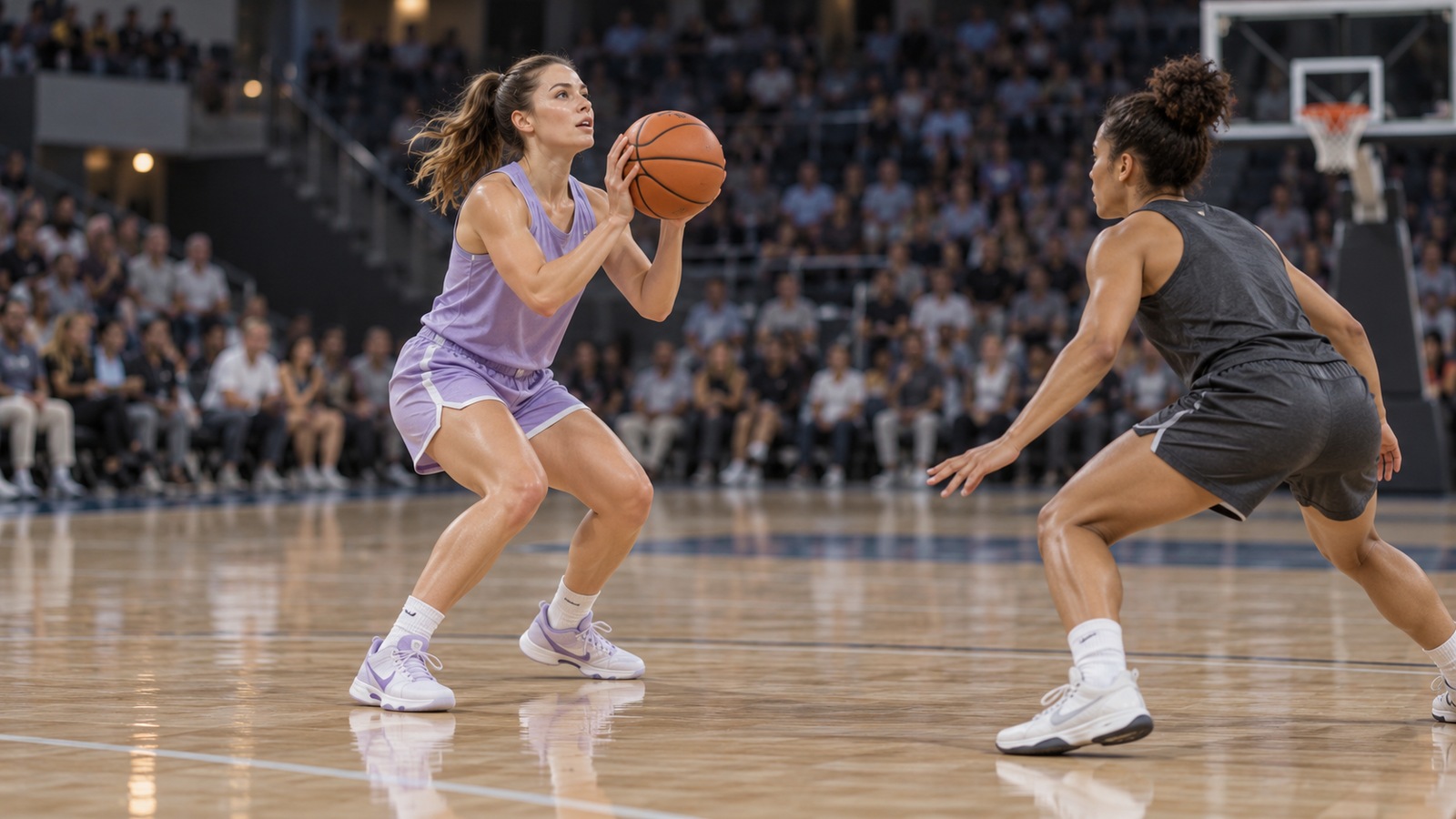
Clark’s shooting range forces defenders to make decisions farther from the basket than they would against many guards. Meeting her early can reduce the space available for a comfortable attempt, but it also stretches the defense. A screening teammate then becomes more than an obstacle in the defender’s path: the screen can begin a sequence in which another player rolls into newly opened space. The threat of the jumper helps create the pass, which is why evaluating Clark as only a shooter misses the relationship between her most visible skill and the opportunities other players receive.
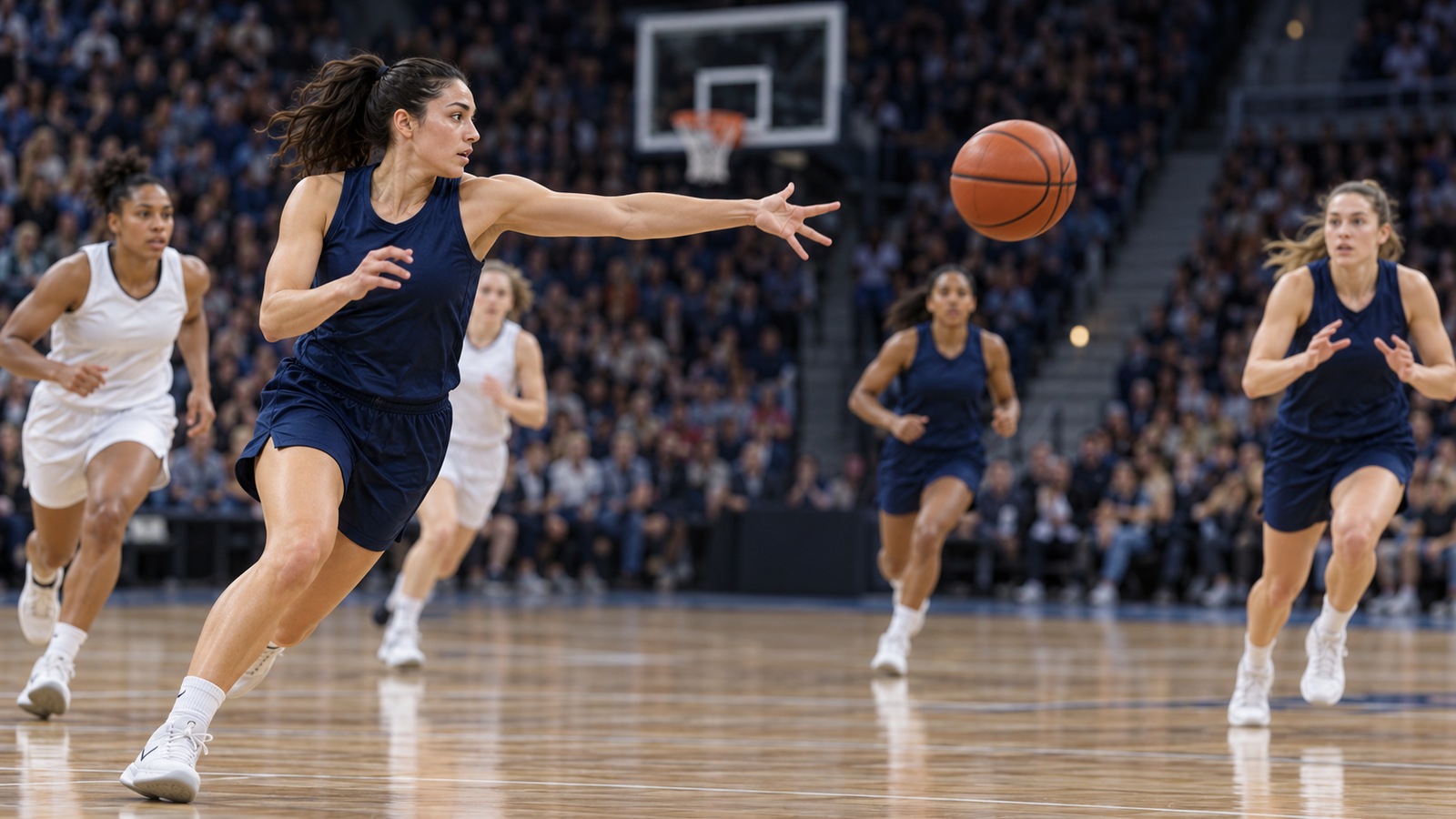
Her transition passing creates a related problem at higher speed. After a rebound or change of possession, she can recognize a teammate moving ahead and deliver the ball before the defense forms its preferred shape. The useful detail is the timing rather than merely the length of the pass. A spectacular attempt that arrives late may not create an advantage; an early, accurate delivery can let a teammate finish without needing another dribble. Watching the receiver and the recovering defenders therefore reveals more about the possession than following Clark alone from the moment she gains control.
In half-court play, pace changes help her read what the defense is offering. She can use a screen, pause, keep a defender engaged, and then choose between a shot and a passing lane. This does not mean every decision succeeds. A high-responsibility creator will encounter pressure, imperfect spacing, and mistakes. The point is that her offensive identity contains several connected tasks. Defenders must consider the pull-up, the drive, and the delivery to someone else, while Clark must decide which opportunity is genuinely available rather than selecting the most dramatic option by habit.
Indiana’s First Pick Began a Professional Adjustment
The Indiana Fever selected Clark first overall in the 2024 WNBA Draft. Moving from college to the professional game changed the difficulty of familiar actions. Defenders were stronger and more experienced, team scouting was detailed, and passing windows could close more quickly. The transition also involved learning the timing and preferences of new teammates. A playmaker’s effectiveness depends partly on shared understanding: a pass that made sense with one college cut may fail when a professional teammate reads the same space differently. Development therefore concerned both individual execution and the connections around it.
Early challenges should be understood in that setting instead of being treated as proof that college production could not translate. The opposite shortcut is equally weak: impressive college records did not remove the need to adjust. Clark’s rookie season provided actual professional evidence, including growth across the schedule and a major role in Indiana’s offense. The most useful comparison follows how decisions and timing evolved, rather than choosing a few games that confirm a preferred story. A professional transition is a process observed across changing opponents, workload, and familiarity with the team’s own system.
The Rookie Assists Put Playmaking Beside the Scoring
Clark earned 2024 WNBA Rookie of the Year honors and produced 337 assists during the regular season, including a 19-assist game against Dallas. The league’s 2024 season review identified those assist totals as records. They are important because the public image of the deep three can otherwise conceal the breadth of her offensive responsibility. An assist is still a recorded outcome that depends on a teammate completing the play. It does not capture every good decision or every advantage created, but it provides a concrete record of how frequently her passing became a made basket during that season.
The Next Two Seasons Added Interruption and Response
Injuries limited Clark’s 2025 regular season to 13 appearances. That interruption changed the career narrative from a continuous upward line into a more realistic account of professional development. Availability affects rhythm, preparation, and the opportunities a player has to build with teammates. It should not be reduced to a character judgment or treated as a complete prediction of what comes next. The relevant historical distinction is that the limited season created a much smaller sample than her rookie year, so direct comparisons need to acknowledge both the games played and the surrounding circumstances.
The completed 2026 regular season supplied a different set of evidence. Clark averaged 22.3 points and 8.3 assists, and the Fever reported that she received Associated Press All-WNBA First Team recognition and AP Comeback Player of the Year honors. Those are the specific honors described by the team’s September 2026 announcement; they should not be casually relabeled as a different organization’s award. Together, the availability and production established a meaningful response to the preceding interruption while leaving the broader assessment of her career open.
This profile uses those verified regular-season developments as its current statistical endpoint. It does not assume a future playoff result or treat an emerging career as complete. That boundary is useful for readers arriving after a headline has circulated widely. A player profile should distinguish what has already happened from what supporters expect or hope will happen next. Clark’s early professional years already contain significant achievements and a difficult interruption, giving enough material to explain her development without forecasting the number of titles, awards, or records she may eventually accumulate.
Read Her Statistics Through the Offensive Role
Points and assists describe two major outputs, but interpreting them requires attention to responsibility. A guard who handles the ball often has more opportunities to create shots and more opportunities to make mistakes. Turnovers should therefore be examined alongside the type and difficulty of the decisions involved. That context does not excuse a poor pass; it makes the evaluation more precise. The question is which errors can be reduced while preserving the productive aggression that creates good possessions, rather than assuming that all risk should disappear from the game of a primary creator.
Efficiency also needs the correct comparison. Three-point percentage describes made attempts relative to attempts, while shot difficulty and the surrounding offense influence what those attempts look like. A late-clock pull-up after a stalled possession is different from an uncontested catch-and-shoot opportunity. Likewise, the defensive attention Clark draws can help a teammate even when she does not record the final assist. A balanced profile uses the box score as evidence and then studies the possessions that produced it. Statistics become more useful when their boundaries remain visible instead of being asked to answer every basketball question alone.
Defense Remains Part of a Complete Player Profile
Offensive attention can make defense feel like a separate discussion, but it remains part of Clark’s overall role. On-ball positioning, screen navigation, transition recovery, and off-ball awareness all affect team possessions. A fair evaluation looks at those actions rather than using scoring production as a substitute for defensive analysis. It also recognizes how assignments and team coverage shape what a guard is asked to do. Development can occur in these less celebrated details even when the most widely shared highlight continues to be a long shot or an ambitious pass.
Stardom Enlarges the Audience Without Settling the Analysis
Clark’s rise brought unusual attention to the games in which she played. That visibility belongs in her story, but it should not erase the players and institutions that built women’s basketball before her or the teammates and opponents contributing to its present. A new audience can enter through one compelling athlete and then discover a much wider sport. The most useful profile supports that discovery. It explains why Clark attracts attention while encouraging readers to notice the screens, cuts, defensive choices, and competing stars that make the basketball itself worth following.
Public discussion can also compress her career into a series of arguments about ranking, popularity, or rivalry. Those conversations often reveal less than careful attention to the game. A player can be commercially significant and still have specific weaknesses to improve; she can make a poor decision without that possession redefining her entire future. Keeping those ideas together makes analysis more interesting. Clark’s influence and her ongoing development are both real parts of the profile, and neither requires the other to disappear whenever a result or a social-media debate becomes emotionally charged.
Watch the Defender Who Leaves Someone Else Open
The simplest way to understand Clark’s basketball is to widen the frame. Watch where defenders meet her, what the screener does next, and which teammate gains space because help has shifted. Then follow whether her decision uses that opening. The records provide landmarks from Iowa through her early Indiana seasons, while those possessions reveal the craft connecting them. Her career remains in progress, but the identity is already clear: a guard whose shooting range changes defensive geometry and whose passing turns those changes into opportunities for the rest of the team.