The Rally Is Often Still Alive When Gauff Reaches It
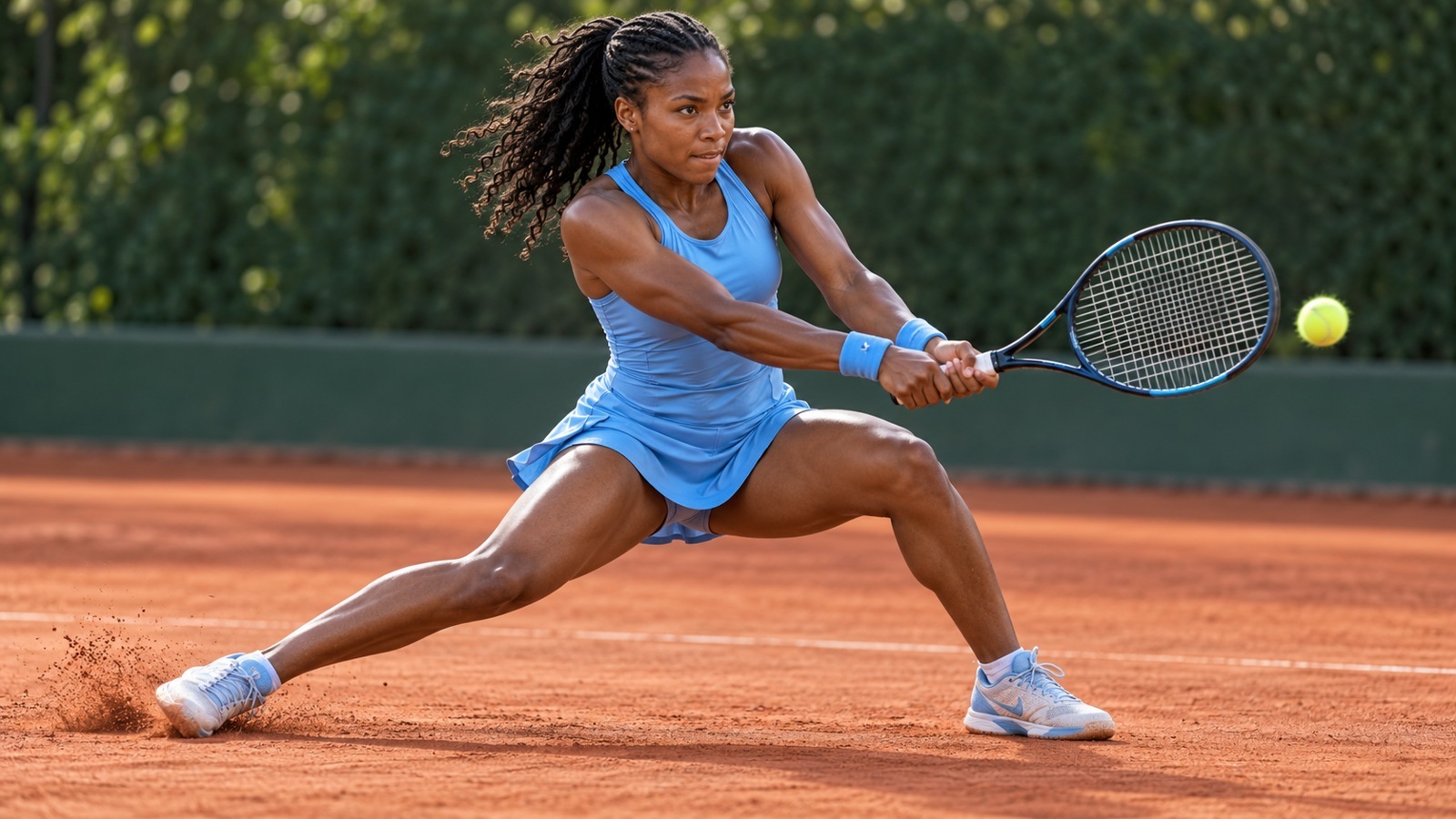
Coco Gauff’s speed can turn an apparently finished point into another decision for her opponent. A difficult recovery becomes a deep reply, the player across the net has to hit again, and a rally that began on unfavorable terms can change direction. That ability is central to her tennis, and it anchors this cross-sport tennis profile. Soccer readers will recognize the value of recovering into a useful position, although the technical demands and scoring of the two sports remain different. Her rise also involves an early Wimbledon breakthrough, major singles titles on two surfaces, doubles success, and the continuing technical choices that determine how she serves and attacks. This account follows the established career landmarks through verified 2026 results while explaining the playing qualities that connect them. Gauff is neither simply a defensive athlete nor a finished product whose future can be read from a trophy count. She is a developing champion whose movement, competitive judgment, and willingness to keep solving the point make her especially interesting to watch.
A: At fifteen she reached the fourth round and defeated Venus Williams in the opening round.
A: She won the 2023 US Open.
A: She won the clay-court major in 2025.
A: Reaching the ball is most useful when the return makes the next opponent shot difficult.
A: No. Recovery can create the opportunity to move from defense into attack.
A: Placement, reliability, return quality, and the next-ball position all matter.
A: Katerina Siniakova was her partner.
A: The WTA career listing records the Cincinnati singles title.
A: No. Analysis should distinguish visible decisions from an invented internal account.
A: Follow how recovery depth and position change the opponent's next options.
A Teenage Breakthrough Created Unusual Expectations
Gauff reached the fourth round of Wimbledon in 2019 at fifteen, defeating Venus Williams in the opening round. That result introduced a large audience to a player who had already shown promise in junior tennis. The distinction matters: a televised breakthrough can look sudden while resting on years of preparation. It also changes the environment around development. Once an athlete becomes nationally recognizable, an ordinary loss can be interpreted as a verdict on the future rather than one result within the difficult process of learning to compete against experienced professionals.
The attention created a particularly demanding comparison between potential and immediate results. A young player can possess extraordinary tools without yet having reliable answers to every opponent or surface. Gauff’s early career is better understood through that distinction than through the expectation of an uninterrupted ascent. Tournament experience adds information about patterns, pressure, recovery, and preparation that junior success cannot fully provide. The important development question is how a player uses those experiences, rather than whether each new season matches the excitement surrounding the first headline.
A breakthrough also changes the practical task of opponent preparation. As more matches become available to study, other players can identify preferred patterns and test uncomfortable situations more deliberately. The young player’s next challenge is not simply repeating the original success. It is learning to preserve strengths when opponents arrive with a clearer plan to disrupt them. That exchange between preparation and response helps explain why development can continue even when a new season contains fewer spectacular headlines than the first one.
The Major Finals Mark Different Stages of the Career
The main singles milestones include a Roland-Garros final in 2022, the US Open title in 2023, and the Roland-Garros title in 2025. Those achievements describe a progression across different surfaces and competitive situations. The 2022 final was an experience of reaching the last match; the later victories demonstrated that she could complete the tournament. Keeping those stages separate makes the chronology more useful. A first major final is not an automatic forecast of the next result, while a later title does not erase the learning and uncertainty that preceded it. Her official WTA record provides the career anchors.
Movement Creates Time, but the Reply Decides Its Value
Gauff’s court coverage matters because it changes the number of shots an opponent must produce. Reaching a wide ball prevents an immediate winner, but the quality of the reply determines whether the recovery actually resets the rally. A short, floating return may simply offer another attack. A deeper, better-directed response can make the opponent restart the point from a less comfortable position. Watching the landing area of the recovery ball therefore reveals more than admiring the distance she covers. Athleticism and shot selection work together within the same defensive action.
Her recovery position is another useful detail. After striking from a difficult place, she has to judge where to move before the next ball arrives. Returning automatically to the geometric center is not always the best answer, because the opponent’s angle and likely options shape the next threat. The visible running becomes more informative when connected to that judgment. A player can be fast and still leave the wrong space exposed; effective coverage combines physical range with an understanding of what the previous shot has made possible.
This is why calling her game defensive can be too narrow. A demanding rally contains changing relationships rather than permanent identities. One player may defend a wide shot, recover neutral ground, and then attack the next short ball. Gauff’s movement can help her travel through those stages, but she still has to recognize when the opportunity changes. The ability to keep a point alive becomes most valuable when it also creates a route toward taking control, rather than merely extending the rally until another player chooses its ending.
The Backhand Helps Organize Her Baseline Tennis
A stable backhand can give a player a reliable pattern when a match becomes complicated. For Gauff, that side is important both in absorbing pace and in redirecting the rally. The useful viewing question is how she chooses direction, height, and depth under different kinds of pressure. A cross-court exchange may establish a manageable pattern; a change down the line can challenge the opponent’s movement while creating a new recovery demand. The same stroke can therefore serve control or attack, depending on the position and the choice made before contact.
Reliability should not be confused with mechanical perfection in every match. Timing, confidence, wind, surface, and the opponent’s ball can all alter execution. A meaningful technical profile studies patterns over several situations instead of presenting a favorite stroke as an automatic solution. It also recognizes the relationship between wings. An opponent may try to avoid a comfortable exchange, change height, or move Gauff into a position where the next shot is harder. The backhand’s value is partly expressed through the choices it persuades the other player to make.
The Serve Connects Power With the Next Ball
Gauff has a powerful serve, but serve evaluation should extend beyond speed. Placement, first-serve availability, second-serve reliability, and the position of the return all affect how the point begins. A fast delivery that frequently leaves the server under pressure is a different resource from a well-placed serve that consistently creates a manageable next shot. Technical changes can also require time to become dependable under tournament conditions. A complete profile therefore treats the serve as a continuing system of decisions and execution, rather than a single number displayed during an especially quick attempt.
Attacking the Forehand Is a Decision as Well as a Technique
Discussion of Gauff’s forehand often becomes a shortcut for discussing the whole player. That is rarely helpful. A stroke can be an area of technical work while the player remains capable of winning important matches through the full combination of skills available. The better question is which forehand situations are difficult: a rushed ball near the body, a high reply, a change of direction, or an aggressive attempt from an unfavorable position. Specific situations reveal possible adjustments more clearly than repeating a general label about weakness.
Shot selection shapes those situations. Choosing to attack from too far behind the baseline can increase the distance and precision required. Waiting for a shorter ball can provide a more comfortable platform but may allow an opponent to dictate first. The balance changes with the matchup and the conditions. Gauff’s competitive task is to decide how much risk the point requires and which pattern offers the best chance to move forward. A profile that includes that judgment explains more than a catalog of isolated errors.
Improvement also need not appear as a dramatic new shot. A slightly better recovery position, a more selective direction change, or an earlier recognition that the rally should be reset can reduce difficult attempts. Those changes can make an existing stroke more effective without producing an obvious highlight. They are worth watching because tennis development often becomes visible through fewer avoidable problems. The player’s technical work and tactical decisions interact, and outside observers should resist claiming a complete explanation from the outcome of one televised point.
Major Wins Show Adaptation Within the Match
Gauff defeated Aryna Sabalenka in both her 2023 US Open and 2025 Roland-Garros singles finals. The surfaces and match conditions differed, which makes the shared opponent an interesting connection without making the contests identical. The broader significance is the ability to compete through changing momentum on a major stage. A championship match rarely stays within one comfortable pattern. The player has to keep identifying which actions remain useful when an opponent is striking well, when conditions interfere, and when an early plan does not produce the expected advantage.
Adaptation should be described through observable choices wherever possible. Changes in rally tolerance, return position, height over the net, or willingness to attack a particular ball can be studied from the match. Private emotions are less accessible. It is reasonable to recognize competitive composure without inventing what a player thought between points. That boundary makes analysis more precise. The achievement lies in sustaining effective decisions under pressure, while the complete internal experience remains the athlete’s own rather than something a highlight package can reveal to spectators.
Doubles Adds Another Dimension to the Profile
Gauff’s doubles career includes the 2024 Roland-Garros title with Katerina Siniakova. Doubles asks different questions from singles: movement depends on a partner, the net becomes central, and decisions must fit a shared arrangement. Success in that setting broadens a player’s competitive experience without proving that every doubles skill transfers automatically to singles. It is nevertheless an important part of Gauff’s tennis identity. A profile focused only on the most prominent singles trophies would miss evidence of her ability to operate within another court structure and coordinate with a teammate under tournament pressure.
The Verified 2026 Results Extend the Story
The WTA’s career listing records a Cincinnati title and finals in Miami and Rome in 2026. These results provide current landmarks without requiring a prediction about later tournaments. They also show why a player profile should not freeze at the first major victory. Continued tour performance involves adapting to familiar opponents, different surfaces, and the expectations attached to established success. The same player can arrive at a tournament with more experience while still confronting a new practical problem. A career remains active work after the breakthrough becomes part of history.
Current rankings and season totals can change quickly, so this overview emphasizes dated achievements rather than treating a temporary position as a permanent description. The career record is distinct from a forecast about how many more majors she will win. Readers can recognize an already substantial body of work while leaving the future open. That is especially important for someone whose public career began so young. The profile becomes more accurate when it makes room for continued growth and ordinary competitive variation instead of demanding that every result prove either inevitable greatness or unexpected decline.
Watch How She Changes the Opponent’s Next Choice
To understand Gauff, follow the rally beyond the spectacular reach. Notice the depth of the recovery, the position she takes afterward, and whether the opponent has to rebuild an advantage that seemed secure. Then watch the moments when she decides to attack rather than extend. Her trophies and dated results supply the chronology, but those choices explain the tennis connecting the milestones. The distinctive combination is not speed alone. It is the possibility of turning movement into time, time into a better position, and that position into a new decision about who will control the point.