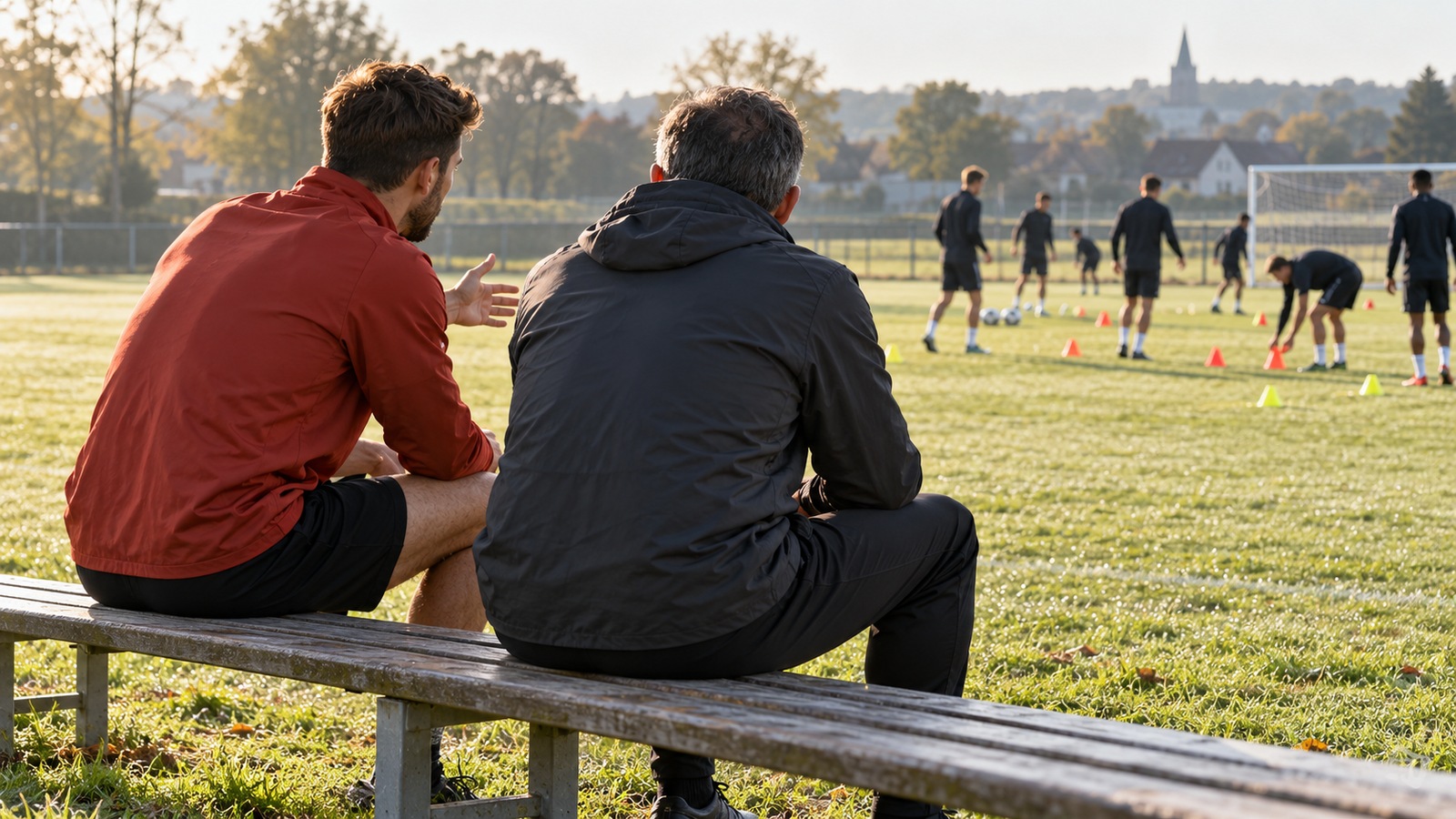
Your First Job Is to Understand the Team You Have
Being named captain can produce an immediate urge to change something: deliver a speech, set new rules, or prove that the appointment was deserved. A better starting point is a short conversation with the coach and a careful look at how teammates already work together. The role becomes useful when you know which problems need attention, what authority you actually have, and how your communication reaches different people. This guide turns captaincy into a practical sequence of actions, from the first week through training routines, matchday decisions, difficult conversations, and review. It is written for soccer captains and players in other team sports who want to help their teammates perform together. You do not need to invent a commanding personality. You need a workable approach that the group can recognize, trust, and use when the game becomes difficult.
A: Ask what the coach expects and which decisions remain with staff.
A: Start with one or two manageable problems rather than attempting to transform everything.
A: Explain that you can raise concerns without controlling the selection outcome.
A: Name a specific action linked to the team's agreed task.
A: Choose a calm private moment unless immediate safety requires intervention.
A: Listen, maintain their inclusion, and encourage a direct conversation with the coach.
A: Involvement should fit their preferences and the staff's medical guidance.
A: Restore the next playable task and prevent blame from spreading.
A: Give teammates suitable tasks with clear ownership and boundaries.
A: Look for specific improvements in communication, follow-through, and teammates' ability to contribute.
Agree on the Role Before Making Promises
Ask the coach what they expect the captain to handle. The answer may include welcoming players, communicating practical information, helping organize training, or bringing concerns to staff. Clarify which decisions remain with the coach, especially selection, discipline, and tactics. This conversation prevents a common problem: the captain promises a change that they do not have the authority to deliver. A clear remit also helps when teammates bring complaints, because you can explain what you can do rather than appearing either powerless or more powerful than you really are.
Discuss how disagreements should reach the coach. A brief check-in after training may work better than messages sent in frustration late at night. Establish how sensitive issues should be handled and which matters need an immediate response. If the team includes children, safeguarding concerns belong with the responsible adult and the organization’s established procedures. Captaincy does not make a player the investigator or counselor for every serious problem. Knowing the appropriate route is part of serving the team well, particularly when a concern extends beyond ordinary sporting frustration.
Then explain the practical arrangement to teammates in ordinary language. You might say that you can bring a training concern to the coach but cannot guarantee a selection outcome. This is more helpful than announcing broad promises about representing everybody. Teammates can decide what to raise when they understand the route and its limits. The conversation also gives you permission to be honest later: an issue can be heard properly even when the final answer is not the answer the person hoped to receive.
Spend the First Week Learning Before You Lead Loudly
Watch where the team’s daily routine loses energy. Perhaps new arrivals do not understand the warmup, the same players collect equipment every session, or information reaches one social group before everyone else. These are concrete problems that a captain can often help solve. Avoid beginning with an ambitious attempt to transform the team’s entire culture. A small improvement that people experience is more credible than a long declaration of standards that nobody yet knows how to apply. Observation gives your first action a practical purpose.
Speak with players outside your usual circle. Ask what helps them prepare, what causes avoidable confusion, and what they need to understand their responsibilities. You are gathering perspectives rather than promising to satisfy every preference. Keep the discussion specific enough to produce an action: an unclear meeting time can be corrected, while a general complaint that everything feels wrong needs further explanation. By the end of the week, choose one or two issues that fit your remit and tell the group what will happen next.
Build One Communication Routine That Everyone Can Follow
Reliable communication usually needs fewer channels and clearer ownership. Agree where practical team information will appear, who confirms changes, and when players should respond. A message about a changed arrival time should state the new time directly, rather than burying it in a discussion thread. Check that the arrangement includes substitutes, injured players, and newcomers. The purpose is to reduce uncertainty for the whole group, not to make the captain the indispensable source of every detail. If the routine works when you are absent, it is doing its job.
Use Training to Establish Credibility Through Useful Actions
Arrive prepared enough to begin your own work properly. This does not require becoming the first person through the gate every day or performing enthusiasm for an audience. It means that teammates see a dependable relationship between your responsibilities and your behavior. When a drill stalls, help restore the agreed task. If the coach is explaining something, make it easier for others to listen. Your actions should make the session function better rather than compete with the coach for attention or turn every routine moment into a leadership demonstration.
Choose feedback that gives the player something they can actually change. Telling a teammate to care more may express frustration without identifying a solution. Asking them to recover inside after losing the ball names an observable action. Where possible, connect the request to the team’s agreed plan. That makes it less likely to sound like a personal preference or criticism invented by the captain. When your own execution is poor, accept the same level of specificity from others and make the adjustment visible.
Pay attention to who is being left outside the session socially. A player can be physically present while rarely receiving information, encouragement, or a place in informal conversations. Including that person need not become a public rescue scene. Invite them into a passing pair, explain the next activity, or ask for their view during a group discussion. These actions create more routes into participation. Over time, they also broaden your understanding of the team beyond its loudest and most established members, which improves the quality of later decisions.
Keep the Pregame Message Short Enough to Remember
Before a match, the coach’s tactical instructions should remain clear. Your contribution can reinforce one or two priorities and help teammates settle into the immediate job. A long emotional speech may feel substantial while giving players too much to retain. Refer to something concrete, such as how the team wants to respond after losing possession or how players should support a teammate who makes an early error. Match the tone to the group. Some teams need energy; others perform better when the last conversation reduces noise.
Check the practical details that can distract players at kickoff. Does everyone know their position, the initial restart responsibility, and the arrangement for warmup equipment? Ask the coach for clarification if a role remains unclear rather than improvising an answer that might contradict the plan. These checks are most useful when they are calm and brief. The captain’s purpose is to leave teammates ready to play, not to ensure that the final moment before kickoff belongs dramatically to the person wearing the armband.
| Moment | Captain’s words and follow-through |
|---|---|
| Before kickoff | ‘When we lose it, recover into the shape we practiced. Sam will call the back line; I will remind the midfield.’ |
| After conceding | ‘We have time. Find the next pass and reset our distances.’ Check that the message reaches the nearest unit. |
| After the match | Ask the coach whether the reminders supported the plan, then ask one teammate what was useful. |
Respond to a Setback With the Next Playable Action
After conceding, the team may need an emotional reset and a positional reset at the same time. Give the immediate action first: return to the agreed shape, identify the next restart, and stop blame from spreading across several players. A detailed review can wait for a suitable moment. If an official’s decision causes frustration, keep the team’s attention on what remains controllable and follow the competition’s communication rules. IFAB describes captaincy as a responsibility for team behavior without general special privileges. Treat that responsibility as a reason to improve conduct rather than an invitation to prolong an argument.
Handle the Difficult Conversation Away From the Audience
When a teammate’s behavior repeatedly harms the group, choose a moment with enough privacy to discuss it properly. Describe the behavior and its effect before asking for their perspective. For example, explain that leaving a drill early makes the next repetition difficult for everyone, rather than beginning with a verdict about the player’s character. Listen for information you may have missed. There might be a practical constraint, confusion about the instruction, or a genuine disagreement. Hearing it does not require abandoning the standard; it improves your chance of finding the right response.
Agree on a specific next step that fits your authority. Perhaps the player will speak directly with the coach, arrive with a clearer plan, or make one visible change during the next session. Do not offer secrecy you cannot keep if the issue involves safety or serious misconduct. If the problem continues, use the agreed route to staff rather than escalating a personal confrontation. The conversation is successful when the behavior and next action are understood, even if the interaction feels uncomfortable and does not end with immediate friendliness.
Support Substitutes Without Making False Guarantees
Players who are not starting still need information, connection, and a meaningful role in preparation. Speak with them as teammates rather than treating them as an audience for the starting group. Ask whether they understand what the coach expects when they enter. Encourage a direct discussion with staff if selection uncertainty is affecting their engagement. Your support can improve their experience without pretending that you control playing time. A promise of honest follow-through is more dependable than a promise of minutes that you cannot deliver.
Keep injured teammates involved in ways that fit their situation and the staff’s guidance. They may appreciate being included in the team conversation even when they cannot take part in the activity. Do not turn the invitation into pressure to train or return before appropriate clearance. Likewise, avoid assigning every absent player a public motivational role. Ask what form of involvement is useful. The aim is continued belonging with sensible boundaries, rather than demanding that people perform enthusiasm about an interruption they may be finding difficult.
Notice whether the team’s informal credit goes only to visible match contributions. A substitute’s preparation, a teammate’s support during practice, or someone else’s effort to welcome a newcomer can deserve recognition too. Make the recognition specific and proportionate. This helps the group understand that contribution has several forms without implying that competition for places has disappeared. A team can maintain demanding performance expectations while acknowledging the work that allows those performances to happen. The captain can help make that wider contribution visible.
Share Responsibility Before You Become a Bottleneck
Choose suitable tasks that other teammates can own. One player might confirm equipment arrangements, another might help newcomers, and a defender might reinforce the unit’s agreed reminders. Explain the task and its limits, then let the person carry it out. Do not delegate and immediately take over whenever the method differs from your preference. Sharing responsibility creates more capable teammates and makes the team less vulnerable to your absence. It also prevents captaincy from becoming a collection of tasks that quietly overwhelms the person appointed to help.
Review the Month Through Teammates’ Experience
After several weeks, ask the coach and a few teammates what has become clearer and what still causes friction. Look for concrete examples rather than a general verdict about whether you seem like a leader. Did the new communication routine reach everyone? Did an agreed follow-up actually happen? Did a difficult conversation change the next session? Those observations reveal whether your actions are useful. They also make improvement manageable, because you can revise a particular habit instead of trying to become an entirely different personality.
Keep the parts that help and change one weak point at a time. You may need to speak less during preparation, respond sooner to a concern, or allow someone else more ownership. Captaincy develops through this kind of adjustment. Your teammates should gradually find the team easier to understand and contribute to, including when you are not beside them. That is a practical standard for doing the job well: the group becomes more capable, the expectations become clearer, and responsibility is carried through actions rather than through the armband alone.