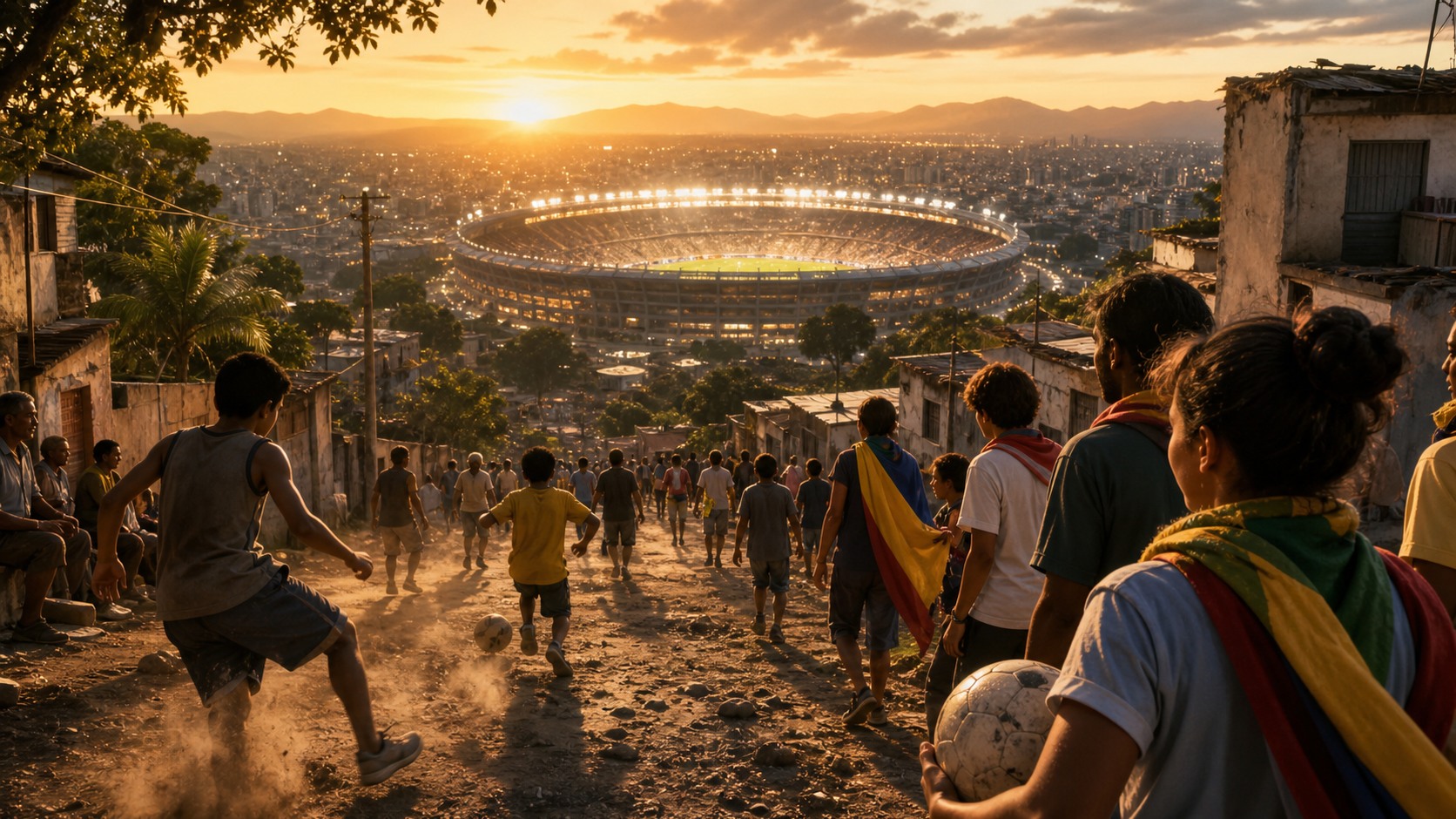
The best way into this subject is not through a list of slogans, but through the systems, memories, and choices that give it meaning. A comparative social essay showing how national teams become stages where countries narrate unity, difference, memory, and aspiration. This guide is written for readers who want the background without losing the drama that makes the game compelling. It separates evidence from habit, uses recognizable examples, and shows why reasonable observers can reach different conclusions.
A: Because it gives people shared symbols, rituals, heroes, and emotional memories.
A: Yes, a deep run can boost pride and global visibility almost overnight.
A: Partly; they reflect coaching trends, culture, history, and media storytelling.
A: Many rivalries overlap with region, class, religion, history, or national tension.
A: They can broaden ideas of who belongs and what the nation represents.
A: They turn national belonging into a visible, emotional, wearable identity.
A: Sometimes, especially during tournaments, though deeper divisions may remain.
A: Shared heartbreak can become part of national memory and football mythology.
A: Clubs often represent neighborhoods, cities, regions, histories, and family traditions.
A: No, each country blends football with its own history, culture, politics, and dreams.
A Team Becomes a Temporary Portrait of a Country
The issue becomes clearer when we see how selections, symbols, songs, and playing styles are interpreted as national characteristics. The distinction matters because supporters often compare outcomes without comparing conditions. Calendar design, travel, squad rules, history, and financial power change what success requires. A fair reading therefore asks not only who won, but what pressures the teams and communities had to navigate. Look at Brazil from the perspective of an unfamiliar viewer. The visible spectacle is immediate, but the deeper meaning depends on knowing the rivalries, incentives, and expectations surrounding it. Explanation adds depth without taking away the emotion. From there, the debate moves from reputation to evidence.
The issue becomes clearer when we see how selections, symbols, songs, and playing styles are interpreted as national characteristics. One helpful way to understand the issue is to follow what happens before, during, and after a major match. Preparation creates expectations, the contest tests them, and the stories told afterward turn one result into evidence about identity, quality, or direction. A case such as Argentina demonstrates why measurement and memory often pull in different directions. Numbers help compare performance, while remembered moments explain why certain conclusions feel important. A strong account makes room for both. The same principle appears in a different form elsewhere.
The Myth of a National Playing Style
The subject opens onto useful traditions while challenging fixed claims that whole populations naturally play one way. There is also a human scale that statistics cannot fully capture. Players experience selection and pressure, coaches make decisions with incomplete information, and supporters attach new events to memories inherited from family or place. Those perspectives explain why the same event can carry several meanings at once. A case such as Argentina demonstrates why measurement and memory often pull in different directions. Numbers help compare performance, while remembered moments explain why certain conclusions feel important. A strong account makes room for both. This tension is not a flaw in the story; it is part of the story.
The subject opens onto useful traditions while challenging fixed claims that whole populations naturally play one way. The strongest examples are rarely pure. Commercial ambition may support better facilities while raising prices; tradition may protect belonging while excluding newcomers; intense competition may improve standards while encouraging short-term decisions. The value of comparison lies in holding those tensions together. With Germany, geography matters as much as branding. Travel, language, neighborhood identity, and access to the stadium influence who participates and how the event is understood. Global popularity does not erase the local foundation. That broader view keeps the discussion grounded.
Migration Changes Who Represents the Nation
The debate includes diaspora players, dual nationality, belonging, debate, and the reality of modern multicultural squads. Context changes the conclusion. What looks dominant in a financial table may be vulnerable in a knockout match, and what looks old-fashioned may preserve a powerful community bond. Evaluating the subject well requires more than choosing a side; it requires choosing the right evidence. With Germany, geography matters as much as branding. Travel, language, neighborhood identity, and access to the stadium influence who participates and how the event is understood. Global popularity does not erase the local foundation. It also reveals why the subject remains contested.
The debate includes diaspora players, dual nationality, belonging, debate, and the reality of modern multicultural squads. This is where the details become important. Small rules, familiar routes, recruitment choices, and media habits accumulate until they feel natural. Once those details are visible, the larger pattern is easier to understand and less likely to be reduced to mythology. Consider Japan. It illustrates how a recognizable name can stand for several things at once: competitive achievement, institutional strategy, local memory, and a global media image. The lesson is not that every case is identical, but that labels become meaningful through history and repetition. The pattern becomes clearer when the next layer is added.
Victories, Defeats, and Public Memory
The evidence shows how tournaments become reference points for political eras, generational experience, and national confidence. None of this removes disagreement. It improves it. Supporters can prefer different styles or traditions while still recognizing the underlying facts, and that makes the debate more informative than a simple contest of reputations. Consider Japan. It illustrates how a recognizable name can stand for several things at once: competitive achievement, institutional strategy, local memory, and a global media image. The lesson is not that every case is identical, but that labels become meaningful through history and repetition. From there, the debate moves from reputation to evidence.
The evidence shows how tournaments become reference points for political eras, generational experience, and national confidence. In practical terms, that means looking beyond the most famous example. Soccer institutions are shaped by repeated competition, unequal resources, local habits, and decisions made over many seasons. The visible result on matchday is only the final layer of a much larger process. Nigeria provides a useful reference point because it links the elite game to ordinary supporter experience. The major decisions may happen in boardrooms or technical meetings, yet their effects appear in ticket demand, squad confidence, public conversation, and the mood around the next fixture. The same principle appears in a different form elsewhere.
Who Feels Included in the Celebration?
A closer examination reveals gender, race, region, class, language, and unequal access to the national story. The distinction matters because supporters often compare outcomes without comparing conditions. Calendar design, travel, squad rules, history, and financial power change what success requires. A fair reading therefore asks not only who won, but what pressures the teams and communities had to navigate. Nigeria provides a useful reference point because it links the elite game to ordinary supporter experience. The major decisions may happen in boardrooms or technical meetings, yet their effects appear in ticket demand, squad confidence, public conversation, and the mood around the next fixture. This tension is not a flaw in the story; it is part of the story.
A closer examination reveals gender, race, region, class, language, and unequal access to the national story. One helpful way to understand the issue is to follow what happens before, during, and after a major match. Preparation creates expectations, the contest tests them, and the stories told afterward turn one result into evidence about identity, quality, or direction. The example of United States also warns against treating one season as a permanent truth. Soccer changes quickly when coaches, owners, players, rules, or economic conditions change. Long-term stature and current form should inform each other without being confused. That broader view keeps the discussion grounded.
Hosting as a Performance of Modernity
Analysis reveals stadiums, ceremonies, tourism, infrastructure, and the desire to present a particular image abroad. There is also a human scale that statistics cannot fully capture. Players experience selection and pressure, coaches make decisions with incomplete information, and supporters attach new events to memories inherited from family or place. Those perspectives explain why the same event can carry several meanings at once. The example of United States also warns against treating one season as a permanent truth. Soccer changes quickly when coaches, owners, players, rules, or economic conditions change. Long-term stature and current form should inform each other without being confused. It also reveals why the subject remains contested.
Analysis reveals stadiums, ceremonies, tourism, infrastructure, and the desire to present a particular image abroad. The strongest examples are rarely pure. Commercial ambition may support better facilities while raising prices; tradition may protect belonging while excluding newcomers; intense competition may improve standards while encouraging short-term decisions. The value of comparison lies in holding those tensions together. Look at Brazil from the perspective of an unfamiliar viewer. The visible spectacle is immediate, but the deeper meaning depends on knowing the rivalries, incentives, and expectations surrounding it. Explanation adds depth without taking away the emotion. The pattern becomes clearer when the next layer is added.
Club Identity Can Complicate National Unity
The picture includes supporters who prioritize local, regional, or political identities and feel ambivalent about national teams. Context changes the conclusion. What looks dominant in a financial table may be vulnerable in a knockout match, and what looks old-fashioned may preserve a powerful community bond. Evaluating the subject well requires more than choosing a side; it requires choosing the right evidence. Look at Brazil from the perspective of an unfamiliar viewer. The visible spectacle is immediate, but the deeper meaning depends on knowing the rivalries, incentives, and expectations surrounding it. Explanation adds depth without taking away the emotion. From there, the debate moves from reputation to evidence.
The picture includes supporters who prioritize local, regional, or political identities and feel ambivalent about national teams. This is where the details become important. Small rules, familiar routes, recruitment choices, and media habits accumulate until they feel natural. Once those details are visible, the larger pattern is easier to understand and less likely to be reduced to mythology. A case such as Argentina demonstrates why measurement and memory often pull in different directions. Numbers help compare performance, while remembered moments explain why certain conclusions feel important. A strong account makes room for both. The same principle appears in a different form elsewhere.
Identity Is Made, Not Simply Reflected
Ultimately, soccer actively produces conversations about the nation rather than merely displaying an agreed identity. None of this removes disagreement. It improves it. Supporters can prefer different styles or traditions while still recognizing the underlying facts, and that makes the debate more informative than a simple contest of reputations. A case such as Argentina demonstrates why measurement and memory often pull in different directions. Numbers help compare performance, while remembered moments explain why certain conclusions feel important. A strong account makes room for both. This tension is not a flaw in the story; it is part of the story.
Ultimately, soccer actively produces conversations about the nation rather than merely displaying an agreed identity. In practical terms, that means looking beyond the most famous example. Soccer institutions are shaped by repeated competition, unequal resources, local habits, and decisions made over many seasons. The visible result on matchday is only the final layer of a much larger process. With Germany, geography matters as much as branding. Travel, language, neighborhood identity, and access to the stadium influence who participates and how the event is understood. Global popularity does not erase the local foundation. That broader view keeps the discussion grounded.
Final Perspective: How Soccer Shapes National Identity Around the World
The issue becomes clearer when we see how selections, symbols, songs, and playing styles are interpreted as national characteristics. There is also a human scale that statistics cannot fully capture. Players experience selection and pressure, coaches make decisions with incomplete information, and supporters attach new events to memories inherited from family or place. Those perspectives explain why the same event can carry several meanings at once. Nigeria provides a useful reference point because it links the elite game to ordinary supporter experience. The major decisions may happen in boardrooms or technical meetings, yet their effects appear in ticket demand, squad confidence, public conversation, and the mood around the next fixture. It also reveals why the subject remains contested.